
After 20 years in the kitchen industry, from retail to manufacturing, I’ve seen it all. A lot of people ask me what the difference is between a cheap flat-pack kitchen and a quality rigid-built one. The answer lies in how kitchen cabinets are made. It’s not just about the materials, but the entire manufacturing process. I wanted to give you a genuine, no-nonsense look at how we build our cabinets, so you can see for yourself what real quality looks like. For more reading, see our main kitchen advice page.
A Look Behind the Scenes
Made to Order & Delivered in 10 Working Days
Rigid Built Cabinets with Blum Soft Close as Standard
Nationwide Delivery Available
It Starts with the Board
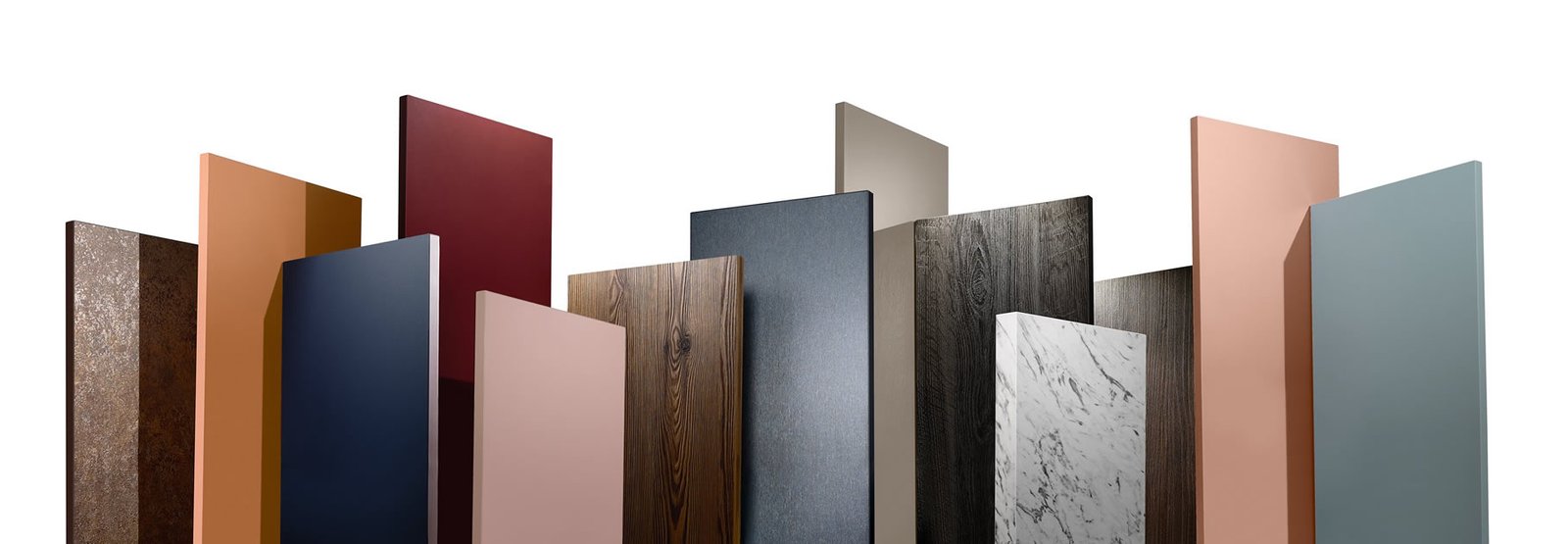
Everything starts with the raw material. You can have the best machinery in the world, but if you use cheap, flimsy board, you’ll get a cheap, flimsy cabinet. We only use high-density 18mm MFC (melamine-faced chipboard) from top European brands like Egger and Kronospan. Crucially, this includes the back panel. Many big-shed suppliers use a thin 3mm or 6mm hardboard back, which offers no structural integrity. An 18mm back panel makes the cabinet incredibly strong and square, ensuring it will last for decades. This is a key part of our process as a specialist kitchen supplier.
The Manufacturing Process: Step-by-Step
Here’s how those large boards are transformed into your kitchen cabinets.
1. Cutting: The 18mm boards are loaded onto a CNC beam saw. We program the exact dimensions for each panel of your made-to-order cabinet, and the saw makes precise, clean cuts every time. This accuracy is vital for a perfectly square cabinet.
2. Edge Banding: Once a panel is cut, the exposed chipboard edges need to be sealed. This is done with an edge banding machine that applies a durable PVC or ABS edging using high-pressure and specialist glue. This process not only gives a clean, finished look but also protects the core of the board from moisture.
3. Drilling: The flat panels then go to another CNC machine for drilling. This is where we drill the holes for shelf pegs, hinge plates, and the dowels used for construction. Using CNC ensures every hole is in the exact right spot, which is essential for the final assembly.
4. Assembly: This is where it all comes together. We use a combination of glue and dowels to construct the cabinet. The panels are assembled, checked for squareness, and then put into a press to ensure a solid, permanent bond. This is what makes a rigid cabinet so much stronger than a flat-pack version you have to screw together yourself.
Made-to-Order vs. Off-the-Shelf
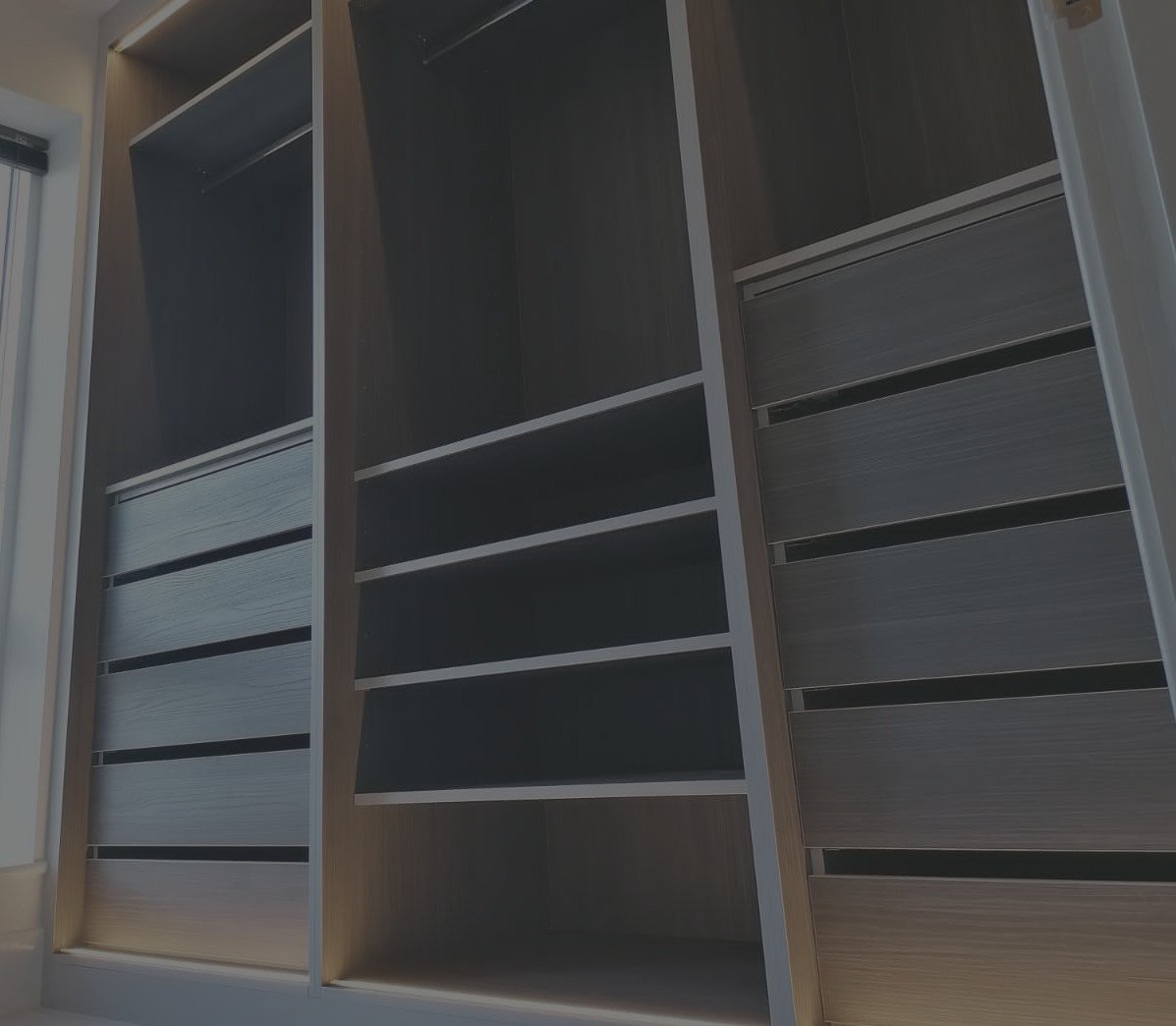
Because we follow this kitchen cabinet manufacturing process for every order, we can make cabinets to any height, width, or depth. The big national suppliers buy their cabinets in bulk in standard sizes (e.g., 300mm, 400mm, 500mm wide). If your kitchen space doesn’t perfectly fit these sizes, you’re forced to use big, ugly filler panels to plug the gaps. With our made-to-order approach, we build the cabinets to fit your space perfectly, giving you a much cleaner, more professional finish with maximum storage.
Final Quality Checks
Before anything leaves the factory, it gets a final quality check. We make sure the dimensions are correct, the edging is perfect, and the construction is solid. We then fit the Blum soft-close hinges and drawer boxes as standard before wrapping the cabinet for protection, ready for nationwide delivery. It’s this attention to detail at every stage that results in a cabinet built to last.
See What Our Customers Say
Get a Quote for Your Project
Made to Order & Delivered in 10 Working Days
Rigid Built Cabinets with Blum Soft Close as Standard
Nationwide Delivery Available
info@sjball.uk
0161 509 4221
