
How to compare two kitchen quotes fairly

Personally designed. Nationally supplied.
Know what your quote includes.
Two kitchen quotes can look very different while describing almost the same room—or very similar while leaving important work out. The headline total is only useful when you know exactly what sits behind it. A fair comparison checks the room, specification, inclusions and responsibilities line by line.
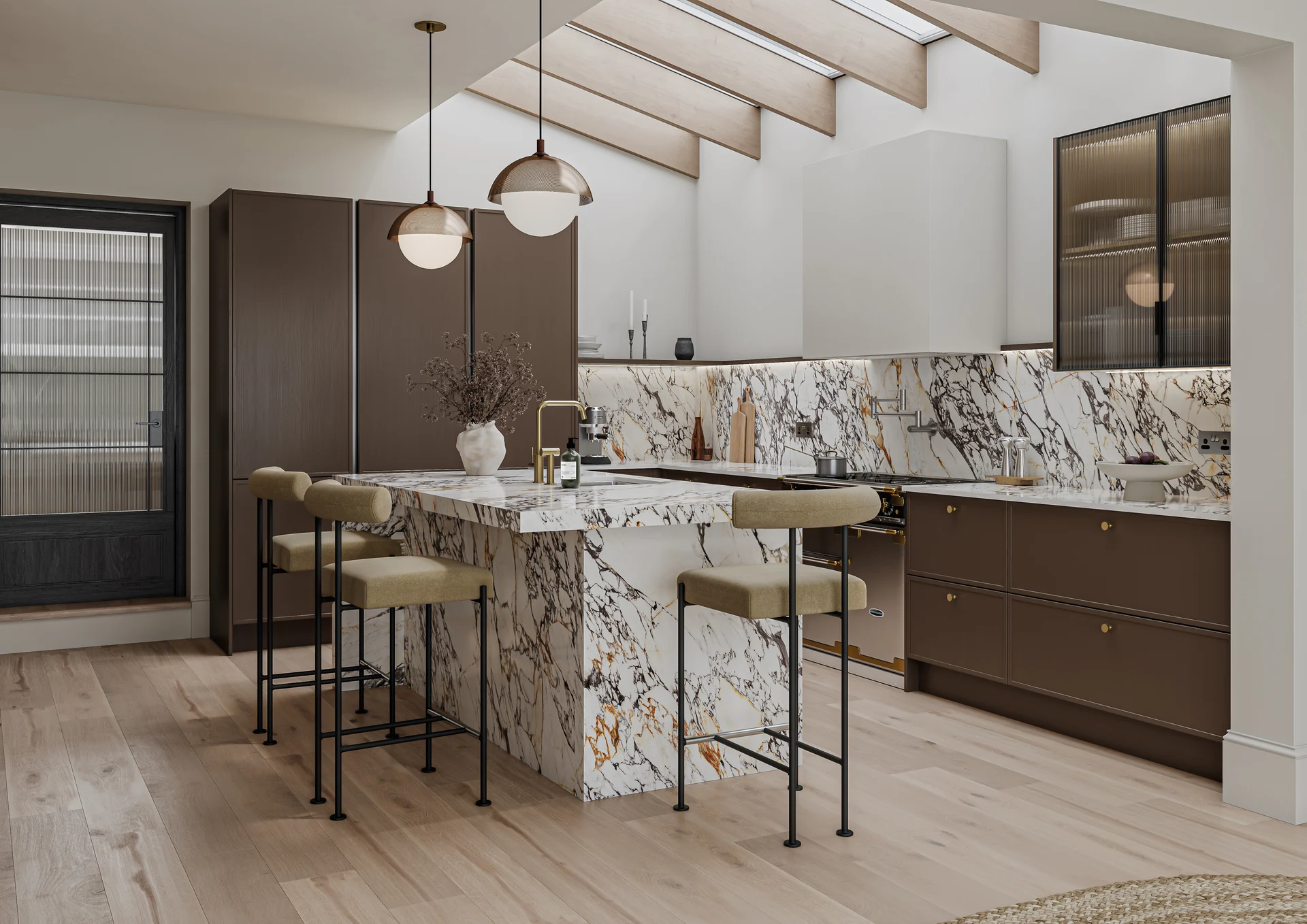
Before comparing, make a copy of each quote and remove any personal or payment information you do not want to share. Check that both are based on the same plan, measurements and appliance positions. If one designer has allowed for a different layout, a different number of units or a different finish, it is not yet a like-for-like comparison.
1. Start with the cabinetry schedule
Count the cabinets, not just the doors. Compare the number and size of base units, wall units, tall units, drawer packs, corner solutions, sink units and any open shelving. Look for service voids, plinths, cornice, pelmets and lighting profiles too.
Then check what the quote says about the cabinet construction and fronts. SJB quotes should set out the specified MFC cabinets, fillers and the hinges and drawer system included in that order. Door material and cabinet material are separate questions: a painted timber frame with a veneered centre panel is not the same description as a solid-wood door throughout. Ask each supplier to identify the material, finish and construction rather than relying on a range name such as Shaker.
2. Look for the details that make a kitchen fit
Fillers and end panels are easy to miss because they are not usually the most eye-catching items in a design. Check whether the quote includes finished panels at exposed sides, scribes to walls, cover panels around appliances and the correct filler widths at corners or beside tall housings. Also check decorative ends, brackets and any panels needed to finish an island.
Hardware deserves its own line. Compare hinge type, drawer runners, drawer box specification, soft-close provision, pull-outs, waste storage and internal accessories. “Hardware included” is too vague to make a reliable comparison; the quantity and model or specification should be clear.
For a wider explanation of carcasses, doors and hardware, see SJB’s kitchen materials guide.
3. Separate worktops, sinks and appliances
Worktops can change the total substantially. Identify the material, thickness, edge detail, upstands or splashbacks, joints, cut-outs, drainer grooves and templating. Check whether the quote includes installation and any special handling. A worktop allowance is not the same as a selected worktop with a confirmed fabrication scope.
List every appliance by make and model, or mark it clearly as an allowance. Compare ovens, hobs, extractors, refrigeration, dishwashers, microwaves, wine storage and laundry appliances on the same basis. Also check whether sinks, taps, waste kits and boiling-water or filtration equipment are included. The SJB worktop guide explains why material and fabrication details matter.
4. Check delivery, fitting and siteworks
Read the responsibility section as carefully as the product list. Does the total include delivery to your postcode, unloading, room protection, installation, final adjustments and removal of packaging? If fitting is separate, ask who measures, who coordinates the fitter and what happens if the site is not ready.
Siteworks may sit outside both quotes: electrical alterations, plumbing, gas work, plastering, flooring, decorating, structural changes, building control and waste removal are common examples. Make a separate list for these items and confirm who is arranging each one. Do not compare a supply-only quote with a managed installation package without showing that difference clearly.
5. Make VAT and exclusions visible
Check whether each line and the final total are inclusive or exclusive of VAT. Confirm whether delivery, fitting, appliances and siteworks use the same VAT basis. A lower-looking subtotal can simply have more items or tax treatment outside the displayed figure.
Ask for exclusions in writing. Missing panels, handles, lighting, sinks, taps, appliance connection, removal of the old kitchen and making-good can all appear later as extra decisions. Also note deposits, staged payments, changes after approval, lead-time assumptions and what happens if an appliance model becomes unavailable.
Use an itemised comparison, not a winner-takes-all total
A simple table with columns for “quote A”, “quote B” and “question” is often enough. Mark each row as included, excluded, provisional, different or unclear. Only compare totals after the unclear rows have been resolved. If a supplier will not itemise a significant allowance, record that as an open question rather than guessing what it covers.
SJB’s painted timber kitchen collection brings together selected styles and practical design considerations, but the quote remains the authority for the exact order specification. For broad buying guidance, you can also browse the kitchen comparisons and buying guides.
Upload an existing quote for a clearer conversation
If you already have a plan or quote, you can begin your kitchen journey with SJB and upload it to the planner. Share only what you are comfortable sharing and redact personal details. The useful outcome is an itemised discussion of specification and inclusions—not a promise of savings or a shortcut around checking the detail.
A note on independent references
Construction and service descriptions vary between suppliers, so read the original specification when comparing a named range. For example, Harvey Jones explains its approach to in-frame design in its SJB’s Harvey Jones alternative guide, while Tom Howley sets out exclusions in its SJB’s Tom Howley alternative guide. These links are provided for reference only; SJB is not affiliated with either company, and their descriptions are not a like-for-like claim about SJB products.
Your questions, answered
What should I compare first on two kitchen quotes?
Start with the same room plan and then compare cabinet counts, fillers, end panels, fronts, hardware, worktops, appliances and installation scope before looking at the totals.
Why can two kitchen quotes with the same layout differ so much?
They may use different door or cabinet materials, hardware, worktop specifications, appliance models or fitting assumptions. Delivery, VAT and siteworks may also be included in one quote and excluded from the other.
Can I ask SJB to compare an existing kitchen quote?
Yes. You can upload an existing plan or quote through the online planner for a discussion of its specification and inclusions. Redact personal or payment information first.
Does a lower kitchen quote mean better value?
Not necessarily. A lower total may omit panels, fitting, worktops, appliances, delivery, VAT or siteworks. Resolve those differences before deciding which quote represents better value for your project.
Let’s start with your home
A kitchen that feels like you.
Share a floor plan, draw your room online or upload a quote you already have. Tell me the style you love and I’ll help you plan your next step.
Begin your kitchen journey with SJB →
Upload your existing design or quotation in the planner. We can look at the layout, specification and what is included in an SJB proposal — without assuming two kitchens are identical.
Free to start, with no obligation. Design and supply scope confirmed in your quotation.


