Made to Order
Custom sizes at no extra charge — built to your exact measurements

Custom sizes at no extra charge — built to your exact measurements
Fully assembled cabinets — not flat-pack — ready to install on site
Delivered to your door in as little as 10 working days
Blum hinges & Antaro drawer boxes fitted as standard
Not sure which style is right for you? Browse all six of our kitchen ranges below — click any image to see the full range and individual product options.
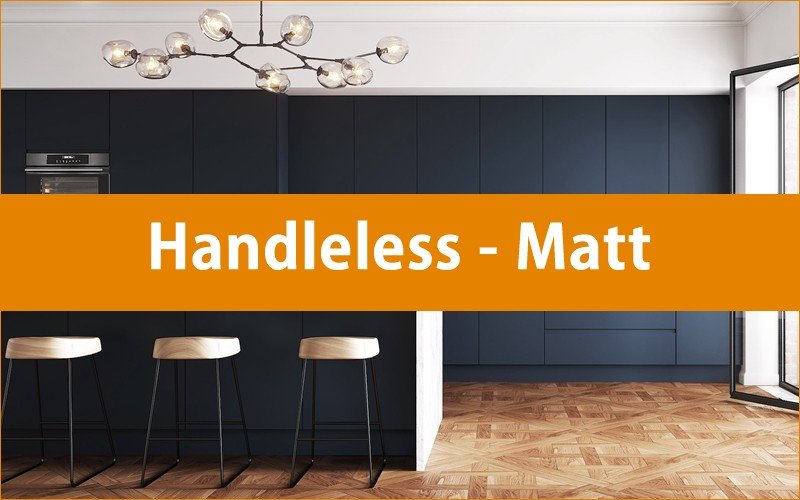

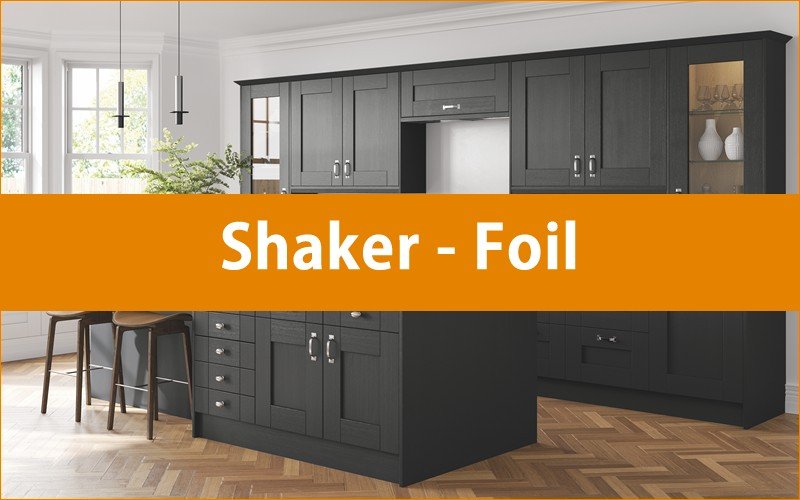
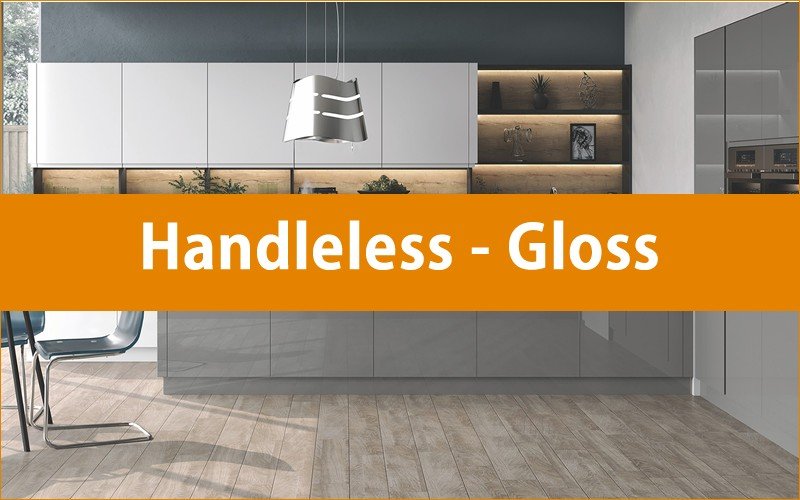
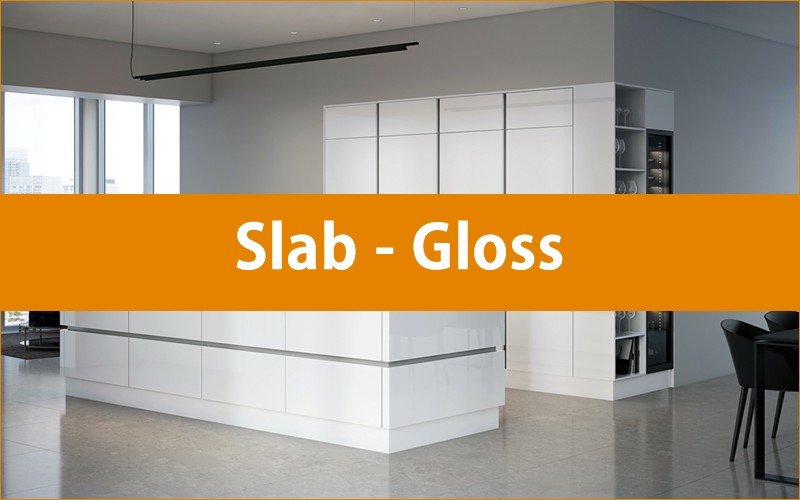

Handleless kitchens have become the defining style of modern British kitchen design. The clean, uninterrupted lines of a handleless door create a sleek, contemporary aesthetic that suits open-plan living spaces, modern extensions, and new-build properties alike. Without protruding handles, the kitchen feels more streamlined, easier to clean, and safer for families with young children. At SJB Trade Kitchens, we supply handleless kitchens in both Matt and Gloss finishes — every unit made to order, rigid built with 18mm Egger and Kronospan carcasses, 18mm solid backs (not hardboard), and Blum soft-close hinges with Blum Antaro drawer boxes fitted as standard.
The handleless look is achieved through two main mechanisms. The J-pull profile integrates a recessed groove along the top or bottom edge of the door, giving a subtle finger-pull that maintains the flat-fronted appearance. Push-to-open mechanisms eliminate the need for any visible handle entirely — a gentle press releases the door or drawer for a completely flush finish. Both options are available across our full handleless range in Matt and Gloss, and both work beautifully in galley kitchens, L-shaped layouts, U-shaped configurations, and island designs.
Our handleless Matt doors deliver a soft, tactile finish that absorbs light rather than reflecting it, creating a calm, understated feel that works particularly well in open-plan kitchen-diners and living spaces. Handleless Gloss doors offer a high-shine, light-reflecting surface that makes smaller kitchens feel larger and brighter — a popular choice for apartments, townhouses, and compact new-build kitchens. Both finishes are available in a wide palette of colours, from classic whites and greys through to bold navy, sage green, and charcoal.
Every handleless kitchen we supply is priced 30-50% cheaper than Howdens, with transparent pricing from the start. We are a kitchen specialist working directly with our manufacturer to cut out the middleman and pass the savings on to you. Unlike vinyl-wrapped doors that peel, lift, and degrade within a few years, our handleless doors are built to last. Nationwide delivery is available from as little as 10 working days, and our kitchen specialist team is available on 0161 509 4221 to discuss your project.
Sleek, modern aesthetic: Handleless doors create an unbroken, flat-fronted surface that gives any kitchen a contemporary, designer feel. The absence of handles means no visual clutter — just clean lines from floor to ceiling.
Perfect for open-plan living: Modern homes increasingly combine kitchen, dining, and living areas into one open space. A handleless kitchen integrates seamlessly into this layout, looking more like a piece of furniture than a utility room. The streamlined profile means the kitchen complements rather than dominates the living space.
Easy to clean & family-friendly: Without protruding handles, there are no edges to catch clothing, no crevices to trap grease, and no sharp points at child height. A quick wipe across the smooth door surface is all it takes to keep a handleless kitchen looking pristine.
Suits new builds & modern extensions: Handleless kitchens are the natural partner for the clean architectural lines of new-build homes and contemporary rear or side-return extensions. The flat-fronted doors mirror the minimalist aesthetic of modern construction, creating a cohesive design throughout the property.
Matt & Gloss options: Our handleless range is available in both Matt and Gloss finishes. Matt delivers a soft, understated look that hides fingerprints and suits earthy, Scandinavian-inspired palettes. Gloss delivers a high-shine, light-reflecting surface that maximises brightness and creates a sense of space — ideal for smaller kitchens and darker rooms.
Not all handleless kitchens are the same. There are two distinct mechanisms used to achieve the handleless look, and understanding the difference helps you choose the right option for your home and budget.
J-Pull Handleless (also called rail handleless or lip-pull): This is the most widely used handleless style in the UK, and the type you will see in the majority of new-build homes and modern kitchen showrooms. A routed channel or protruding lip runs along the top or bottom edge of the door — you hook your fingers underneath the lip to open the unit. The groove is subtle and largely invisible from the front, maintaining the flat-fronted aesthetic. From the side, a slight channel is visible. J-pull is more affordable than true handleless, works with standard carcass construction, and is available across our full Matt and Gloss range. It is the practical, popular choice for most kitchen projects.
True Handleless (push-to-open / integrated handleless): This is the more premium option. With true handleless, the opening mechanism is built entirely into the carcass frame — not the door itself. The door face is completely flat with no visible groove, channel, or lip of any kind. A gentle press on the door activates a push-to-open mechanism inside the carcass, releasing the door. The result is a genuinely furniture-like, seamless appearance — the kitchen looks like a solid wall of cabinetry with no visible means of opening. True handleless is the choice for those who want the most refined, architectural finish possible. It is more expensive than J-pull and requires compatible carcass hardware, but the visual result is unmatched.
SJB Trade Kitchens offers both J-pull and true handleless options across our Matt and Gloss ranges. Our kitchen specialist can advise on which mechanism best suits your layout, budget, and design goals. Call 0161 509 4221 to discuss your project.
A handleless kitchen uses doors and drawers that open without traditional protruding handles. Instead, a J-pull profile (a recessed groove along the door edge) or a push-to-open mechanism allows you to open units with a simple touch or finger pull. The result is a clean, flat-fronted kitchen with no visual clutter — the defining look of modern kitchen design.
Yes. Our full handleless range is available in both Matt and Gloss finishes across a wide colour palette. Matt delivers a soft, tactile surface that hides fingerprints and suits understated, contemporary schemes. Gloss delivers a high-shine, light-reflecting finish that brightens rooms and creates a sense of space. Both are available with J-pull or push-to-open mechanisms.
Every handleless kitchen we supply is rigid built — fully assembled with glued and pinned joints, not flat-pack. Our cabinets use 18mm Egger and Kronospan carcasses with 18mm solid backs (not hardboard), and Blum soft-close hinges with Blum Antaro drawer boxes are fitted as standard. The result is a cabinet that is stronger, squarer, and faster to install than any flat-pack alternative.
Our handleless kitchens are priced 30-50% cheaper than Howdens, all year round. We are a kitchen specialist working directly with our manufacturer, which means no inflated list prices, no fake sales, and no trade-only restrictions. Every customer gets the same transparent pricing from the start.
J-pull handleless (also called rail handleless or lip-pull) uses a routed channel or protruding lip along the top or bottom edge of the door. You hook your fingers underneath to open the unit. It is the most common handleless style in the UK — popular in new builds, more affordable, and available across our full Matt and Gloss range. A subtle groove is visible from the side but not from the front. True handleless (push-to-open) takes the concept further: the mechanism is built entirely into the carcass frame, not the door. The door face is completely flat with no visible groove or channel of any kind. A gentle press activates the push-to-open mechanism. The result is a genuinely seamless, furniture-like appearance — the most premium handleless option available. SJB offers both. Our kitchen specialist can help you decide which is right for your project.
Nationwide delivery is available from as little as 10 working days from order confirmation. We use specialist pallet courier services to deliver directly to your door anywhere in the UK. Our kitchen specialist will confirm the exact delivery window once your order is placed. Call 0161 509 4221 to discuss your handleless kitchen project.
